
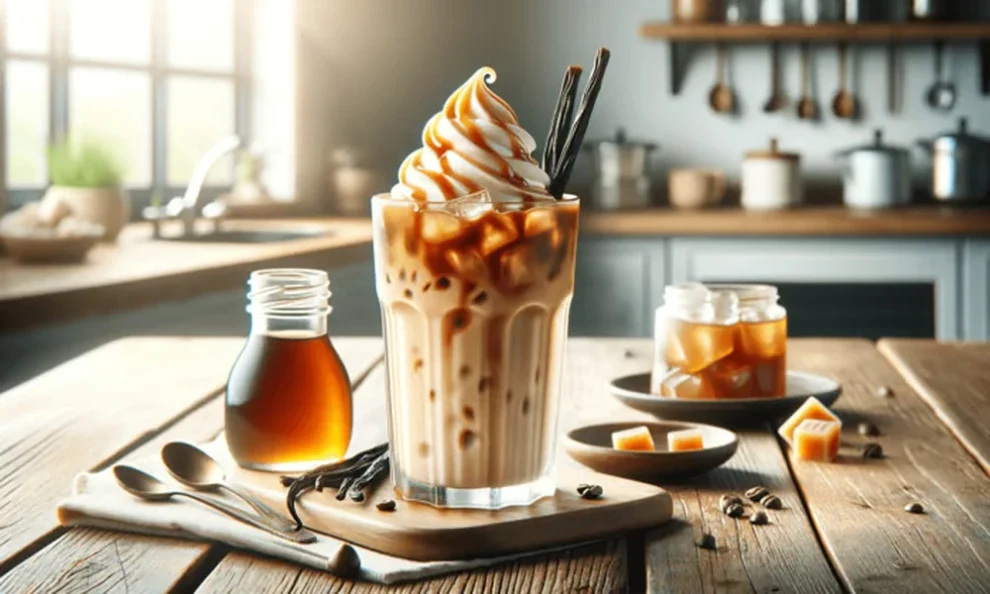

Flavoured coffee has moved beyond a small collection of very sweet lattes. Customers now encounter pistachio, lavender, cherry blossom, hot honey, cinnamon roll and other profiles across coffee shops, bakeries and social media menus. The opportunity is attractive, but adding every fashionable bottle is not a strategy.
A modern flavour menu works when the coffee still has a clear role, recipes are easy to repeat and the range feels deliberate. Operators need to think about audience, season, sweetness, service speed and stock movement before expanding. The best drinks are not simply the most unusual; they are the ones customers understand and want to order again.
Start with a flavour architecture
Instead of selecting bottles one by one, divide the menu into useful families such as comforting, nutty, spiced, floral, fruit-led and dessert-inspired. This reveals gaps and prevents several flavours from doing essentially the same job.
A core range might include vanilla, caramel and hazelnut, while rotating features bring in pistachio, gingerbread or seasonal fruit. The exact mix should reflect the customer base rather than a generic trend list.
Each flavour needs a clear purpose: everyday customisation, a signature drink, a seasonal special or a non-coffee application such as hot chocolate or iced tea.
A defined architecture also simplifies purchasing because every bottle has an expected role and review date.
This part of the decision deserves attention because coffee syrups and espresso coffee are often purchased as isolated products even though the customer experiences them together. A useful plan connects product choice with preparation, service and the moment the drink is consumed. It is worth reviewing the decision in the normal service environment rather than relying only on a supplier description or a quiet tasting. Temperature, preparation time, cup size and the people using the product can all change whether the choice feels successful after repeated use.
Protect the espresso beneath the flavour
The coffee should remain recognisable in a flavoured drink. When syrup dominates completely, the beverage becomes tiring and the quality of the espresso no longer contributes meaningful value.
Operators should test several syrup doses rather than defaulting to the largest pump count. A smaller quantity often creates a more balanced drink and improves gross margin at the same time.
The espresso profile matters. Chocolatey or nutty coffees can support caramel and hazelnut, while brighter coffees may pair more naturally with fruit or floral flavours.
Pairing deliberately allows the syrup and coffee to extend one another instead of competing.
For UK buyers, the practical test is whether the choice remains workable after the first week. Stock movement, staff confidence and repeated drink quality reveal far more than an impressive one-off tasting. It is worth reviewing the decision in the normal service environment rather than relying only on a supplier description or a quiet tasting. Temperature, preparation time, cup size and the people using the product can all change whether the choice feels successful after repeated use.
Design for hot, iced and blended formats
A recipe that works in a hot 8oz latte may taste diluted over ice or become too sweet in a blended drink. Each format needs its own tested ratio.
Cold drinks often benefit from flavours that remain clear at lower temperatures, while warming spices and dessert notes can feel more satisfying in autumn and winter menus.
Ice volume, milk quantity and cup size should be standardised so staff do not compensate by adding inconsistent amounts of syrup.
Developing format-specific recipes prevents the menu from promising one flavour experience and delivering another.
The strongest approach is to make one controlled change at a time and record the result. That prevents a problem in equipment, recipe or handling from being incorrectly attributed to the product itself. It is worth reviewing the decision in the normal service environment rather than relying only on a supplier description or a quiet tasting. Temperature, preparation time, cup size and the people using the product can all change whether the choice feels successful after repeated use.
Use seasonal launches without creating dead stock
Limited-time drinks can create urgency, but only when stock is planned carefully. Operators should estimate likely sales, order conservatively and identify alternative uses for the flavour before launch.
A pumpkin spice syrup might also work in hot chocolate or frappe recipes, while vanilla can move across almost every drinks category. More specialised flavours need a stronger campaign and shorter review cycle.
Launches should have a defined start and end rather than remaining indefinitely because bottles are still on the shelf.
Clear exit planning protects margin and keeps the menu feeling current.
This is also where clear internal guidance helps. A short recipe or purchasing note can preserve the original intention when several people order, prepare or serve the product. It is worth reviewing the decision in the normal service environment rather than relying only on a supplier description or a quiet tasting. Temperature, preparation time, cup size and the people using the product can all change whether the choice feels successful after repeated use.
Build recipes staff can execute quickly
A signature drink that requires several unlabelled bottles, complex layering and an improvised garnish can collapse during peak service. Operational simplicity is part of good product design.
Use measured pumps, standard cup sizes and concise recipe cards. Position the most-used flavours where they can be reached without interrupting espresso preparation.
Staff should know the difference between a standard flavoured latte and a signature recipe so customers receive the same drink on every visit.
Testing a new recipe during a simulated rush often reveals problems that a quiet tasting will not.
Commercial operators should include customer behaviour in the review. What people reorder, finish and recommend is often more useful than what attracts initial curiosity. It is worth reviewing the decision in the normal service environment rather than relying only on a supplier description or a quiet tasting. Temperature, preparation time, cup size and the people using the product can all change whether the choice feels successful after repeated use.
Offer choice without overwhelming the customer
Long syrup lists can slow ordering because customers struggle to compare options. Curated recommendations are often more persuasive than unlimited customisation.
Menus can group flavours by mood or drink, such as ‘best with iced coffee’ or ‘warming winter flavours’. Staff prompts can help uncertain customers choose without reading every bottle.
Sugar-free alternatives may be valuable when demand is clear, but adding duplicates across the full range can create unnecessary stock complexity.
A smaller, better-explained menu usually produces stronger decisions and easier service.
Home users can apply the same logic on a smaller scale by choosing realistic pack sizes and testing the product in their normal mug, brewer and routine rather than under idealised conditions. It is worth reviewing the decision in the normal service environment rather than relying only on a supplier description or a quiet tasting. Temperature, preparation time, cup size and the people using the product can all change whether the choice feels successful after repeated use.
Measure whether a flavour earns its place
Operators should track sales, ingredient usage and remakes rather than judging a launch only by online attention. A photogenic drink is not commercially successful if it sells rarely or takes too long to prepare.
Customer comments reveal whether sweetness, coffee strength or presentation needs adjustment. Staff feedback can identify recipes that are awkward during busy periods.
Contribution margin matters because syrups, alternative milks, toppings and larger cups can change the economics of a drink significantly.
A quarterly range review keeps popular flavours visible and removes options that no longer justify shelf space.
No single specification solves every setting. Volume, audience, equipment and desired flavour all influence whether a decision is genuinely suitable. It is worth reviewing the decision in the normal service environment rather than relying only on a supplier description or a quiet tasting. Temperature, preparation time, cup size and the people using the product can all change whether the choice feels successful after repeated use.
Final thoughts
Flavoured drinks can broaden a café’s appeal without weakening its coffee identity. The key is to treat coffee syrups as menu ingredients rather than decorations and to test every recipe against the espresso coffee beneath it. With a focused range, measured recipes and regular performance reviews, operators can follow trends selectively while creating drinks that remain balanced and easy to serve.
Frequently asked questions
How many coffee syrup flavours should a small café stock?
There is no fixed number, but a focused core range plus a few rotating flavours is usually easier to manage than a long list with low turnover.
How much syrup should go into a latte?
The correct amount depends on cup size, flavour strength and the espresso profile. Cafés should test measured doses rather than relying on an automatic pump count.
Can the same syrup be used in iced and hot drinks?
Usually yes, but the recipe may need adjustment because ice, temperature and dilution affect sweetness and flavour intensity.


Add Comment